


Understanding Jet Lag, and How to Beat It
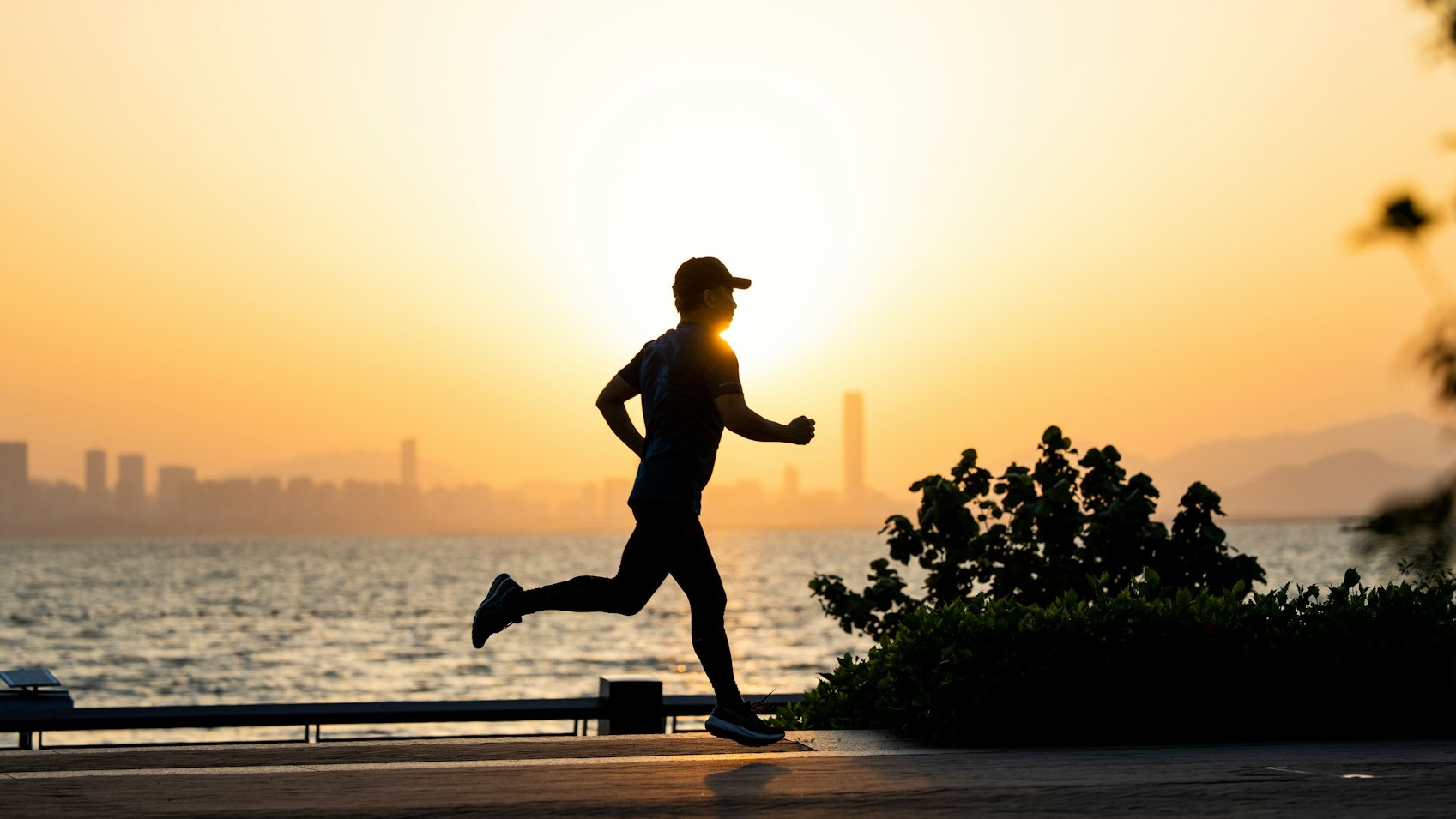
Sunlight changes constantly throughout the day seasons, and all living creatures (humans included) have evolved to follow those natural rhythms. But nature never prepared us for air travel: a near-instant jump across time zones that throws our internal clock into chaos. Jet lag, then, is a perfectly normal response, but thankfully, one can shorten it with the right strategies.
Understanding the basic principles of how our internal clock works is perhaps the most important step to treating jet lag. This is because the suggestions outlined here require some small effort, an effort that you will be willing to make if you truly understand its benefits.
Understanding jet lag
So what is this internal clock that keeps us in a 24 cycle of day and night? The most important one is the so-called BMAL1 gene, a gene inherited from your parents together with the rest of our DNA. Almost all cells in our body contain a copy of our DNA, meaning that they also carry the BMAL1 gene with them. When BMAL1 receives external inputs such as exercise or meals, it orders the production of proteins to take care of such activities and, most importantly, sets a production cycle for these so that they can be readily available tomorrow at roughly the same time.
The problem is that, even if BMAL1 sets proteins and organs to activate cyclically, these can be unsynchronized and happen with large time offsets from one another. To fix this, nature has provided us with the SupraChiasmatic Nucleus (SCN), a pair of lobes located at the base of the brain that act as a master synchronizer. It can be regarded as the director of the orchestra. It does not create any music (all the work is done by BMAL1 and its proteins), but it makes sure that all organs follow the same pace.
To stay in tune with the day/night cycles, the SCN relies almost entirely on light. With early morning light, the SCN orders the production of cortisol, a stress hormone that keeps us alert. At noon, blue-enriched light signals the SCN to maintain high organ activity. At dawn, the red-enriched light triggers the production of melatonin, a hormone that places organ activity in resting mode.
Interestingly, studies show that when the SCN is damaged, the oscillation period estimated by BMAL1 and other genes is 24.2 hours on average. Similar results have been observed in other animals. Why? Because that offset makes the SCN necessary, enabling us to adapt to the changes in light that seasons carry with them. So next time you find yourself living in a cave, remember that your body will add 20 minutes per day to your cycle, causing you to “lose” 5 days after a year.
And now, let’s go back to jet lag. For the careful reader, the steps might already be apparent. I will keep the list short to make sure that you focus just on the important things.
Light
The fastest way to adapt to a new time zone is by exposing your SCN to the new light cycle. If you travel East and wake up tired, keeping the curtains shut during the morning will not help; better to go for a short walk and get some morning light. During the evening, try to lower indoors lights, and avoid sun, even if this one is already with red-enriched frequencies. When flying West, the opposite applies: maximize your light exposure during the evenings.
Office environments tend to use 4000-5000K white light sources with high blue content to promote alertness and focus. However, the blue content in these is still lower than in natural light on a clear day, which is in the range of 6500K. Days with cloud cover have even higher blue content, since the clouds block the inandescent red frequencies from the sun itself, letting mostly blue ones pass. A mid-day walk during an overcast day is perfect for jet lag recovery, thanks to its almost 7500K color.
Households and restaurants typically use 2700K warm light that resembles the sunrise and dawn, suitable for the more relaxed atmosphere intended in such environments. If you find yourself spending a lot of time in these, make sure you allocate slots to go out for walks.
Meals and exercise
Adapting to the schedule of your new timezone is another essential part of getting over jet lag. Prior to your flight, BMAL1 had created millions of proteins coded to perform certain functions at a given time. These proteins can’t “flip” to a new timezone. Once a protein is created, it maintains its original function. The only solution is to produce new ones with the correct time settings and wait until the older ones are cleaned up by the body. This takes time, which is the reason why there is no quick remedy for jet lag.
Eat at the times that apply to your timezone. Avoid eating a bit earlier/later, as this will generate proteins with a still inadequate time setting for digestion, and it will just take longer for you to adapt to the new timezone.
Continue exercising at the same time of day as you did back home. Running and walking are probably the easiest to maintain abroad, as they require minimal planning, but gyms can also be easy to access if you do some planning prior to your trip, just as choosing a hotel close to a gym, and quickly checking the opening times of this one. Gyms have popped up everywhere, unless you go to a remote location.
Alcohol
Today, we know that alcohol does not have any positive effect on human health. It’s just bad, and there is no such thing as “responsible consumption”, just as there is no “responsible smoking” either.
When it comes to jet lag, the main issue is that alcohol consumed three hours before bedtime will negatively affect our REM cycles, reducing sleep quality and increasing tiredness the day after. REM cycles are not times when our brain disconnects and rests. It’s actually the complete opposite. During REM, the brain is working full speed to sort, connect or discard the inputs that we accumulated throught the day. This high activity makes our eyes move while closed, hence the name Rapid Eye Movement (REM). Without proper REM, our brain wakes up as mixed up as we left it in the evening.
For most people, an evening glass of wine might feel like the best recipe for falling asleep. That is the case indeed, since alcohol works like a sedative by attaching to a very important neurotransmitter known as GABA that reduces the activity of our neurons. But that is the problem as well: if the brain is forced into a relaxed state, the high REM activity will not happen. If you drank little, 1 or 2 glasses, alcohol concentrations will decay after 3-4 hours, allowing for a REM “rebound” during the second half of the night. However, the quality of this rebound is usually bad, as the body tends to overshoot it, bringing the brain to too high of a speed that might even wake us up or induce bizarre dreams.
If you drink over 3-4 glasses, your neurons will be off for the entire night. No REM.
Define your priorities
Despite the recommendations from above, your actual execution should vary depending on the goal of your trip. If you are travelling for work and need to be sharp in meetings, the best is that you stick to the recommendations as much as you can. However, if you are going on holiday and plan to relax, setting an alarm clock at 7:00 AM to work on jet lag recovery might not be the best idea.
Plan according to your needs. If you set an unreasonably strict schedule, you will also perceive the actions as a punishment, and this could induce a stress that makes you even more tired. Define your priorities, and enjoy your stay at your destination!