


The Systemic Problem With Air Traffic Control
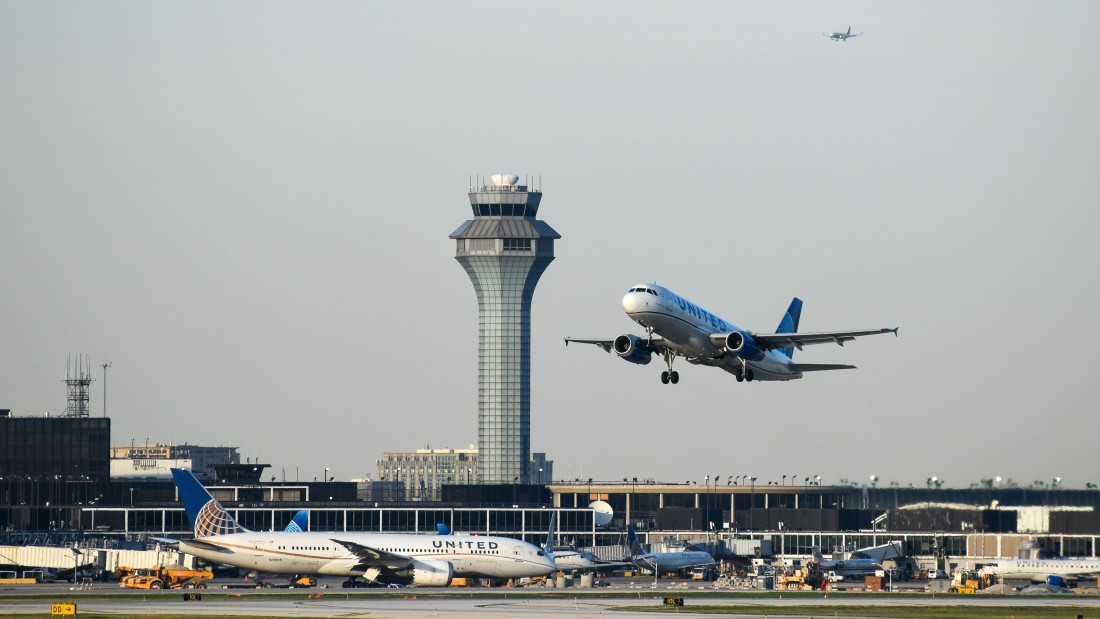
Air Traffic Control (ATC) is severely understaffed. The United States and Europe, the two busiest airspaces in the world, have both experienced decades of chronic shortage. One could blame it on specific events, events that we will cover here, but given the magnitude of the problem in both time and space, these events aren't likely to be the root cause of the problem. There are more important factors at play, and we will get to those first.
Quick note: ATC is not limited to the control towers that one sees at airports. Those are tower controllers, responsible only for the ground operations and immediate airport vicinity. Once the plane departs, it's handed over to the controllers from the Terminal Radar Area Control (TRACON); and once at cruising altitude, to the en route controllers.
Small talent pool, no easy training
The first problem is that governments cannot simply hire graduates from any university to fill ATC positions. For example, in the US, all ATC applicants need to pass through a single academy located in Oklahoma and managed by the Federal Aviation Administration (FAA). This is a problem, because every delay with the Oklahoma academy becomes an issue for the entire pool of potential controllers. Other countries like France do have a university for ATC (in Toulouse), where extended lessons grant them an engineering title as well. But this is more of the same: a single institution to provide for the entire workforce.
The US academy works like a boot camp, serving as a filter and providing basic knowledge on different domains. This training is quite short, on the order of 2-5 months, depending on the controller area of choice. In France, being a university degree, students spend several years studying all details of flight dynamics and monitoring systems. Either way, the bad news is that for both extremes, most of the actual training must be done on the job.
This is perhaps the most critical bottleneck. To be fully certified, graduates must spend about 2-3 years under direct 1-on-1 supervision during real traffic flow. The supervisor must be a fully certified controller, meaning that during this time they will need to reduce the amount of traffic that they use to handle, to adapt it to the trainee's capabilities. Trainees get paid full developmental salaries, so having them results in higher financial costs and lower capacity for the traffic control site.
A large portion of the on-site training is dedicated to learning the complex 3D routes that can develop in all the sectors assigned to their specific region: waypoints, vertical limits, holding patterns, military areas, radio frequencies, inbound/outbound rules… Trainees don't just learn the skill of being a controller; they learn how to run specific sectors.
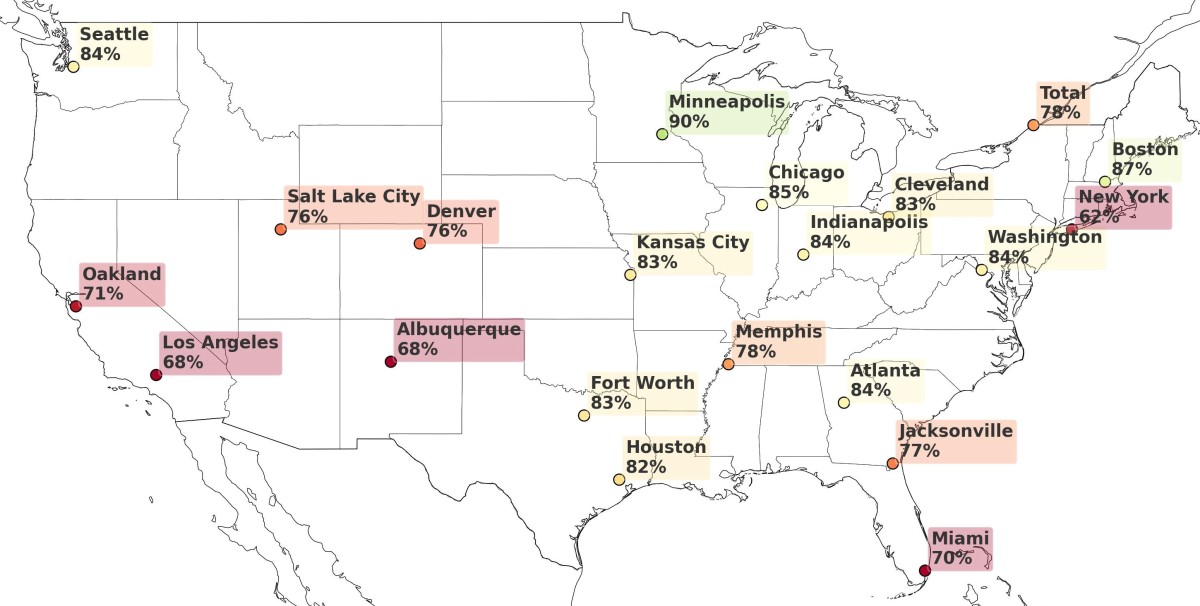
This poses another problem: controllers cannot be quickly shared between sites. For example, if the New York area needs more controllers, they cannot just ask Minneapolis to send a few to help out directly. Those controllers will need to retake the 1-on-1 training to learn the specifics of New York's airspace, and only about 1-2 years later, be able to do the job on their own.
The cherry on top is that controllers are forced to retire at age 56.
All these factors make ATC very sensitive to external disturbances. Knowing this, one could have guessed that governments take extra care to protect this important and sensitive area. As we will soon see, this has not always been the case.
The United States: too many hurdles
In theory, the FAA is self-funded through taxes on passenger tickets, jet fuel usage, etc. However, since they are a government agency, they have to wait for Congress's approval to know when and how much money they will get. Government shutdowns also affect them, as they result in a complete shutdown of the Oklahoma training facility. Both of these factors can set back training plans for much longer.
Unlike the Oklahoma facility, Controllers are required by law (5 U.S.C. § 7311), to be on the job even during a government shutdown (without pay), as they are part of the critical national infrastructure. They cannot even go on strike.
There was one time when ATC did dare to go on strike. In 1981, controllers were overwhelmed with the surge in air traffic from the late 70s. The infrastructure was not ready either, and they were forced to do overtime, work weekends, etc. As a result, their labour union, PACTO (Professional Air Traffic Controllers Organization), encouraged over 13,000 controllers to go on strike. Reagan, the US president at that time, requested all controllers to get back to work within 42 hours under the penalty of being fired for life from any government position. He was not bluffing; the 11,400 controllers who did not return to work were all fired.
The main side effect from the PACTO firings was that it created a giant wave of new hires, most of whom would retire at a similar time. Therefore, even if we speak about events from 1981, the side effects peaked around 2007.
Things got worse in 2013 when the FAA was suddenly ordered to cut roughly $637 million from its budget. This was part of a broader effort from the government to reduce its debt after the 2008 crisis. It was followed by a 16-day government shutdown, which again closed the Oklahoma training facility. During this time, the FAA decided to inflict additional pain on itself by setting a new screening known as the Biographical Assessment test, based on a subjective personality and life-background questionnaire. Many CTI graduates and military controllers got rejected with no further explanation, resulting in a generalized uproar and lower talent acquisition. Congress had to intervene in 2016 to force the FAA to revert to the previous test (Public Law 115-254
One could imagine that COVID-19 would have given controllers a break and a chance to build up personnel. However, due to the distancing requirements, the Oklahoma facility was operating at bare minimums and the 1-on-1 trainings could not be completed. There were so few newly certified controllers that, after the pandemic, retirements had severely understaffed ATC, resulting in one of the most precarious years.
Airports such as JFK in New York are well known for their current severe deficit of controllers, which unfortunately has resulted in close calls such as the near-miss between two planes.
Not all hope should be lost, though. The FAA is currently under a massive hiring period (which will result in another massive retirement in a couple of decades), and, most importantly, they have started accepting training certificates from other centers, not just the Oklahoma facility. A good step towards spreading the risk of the talent pool. In the meantime, current controllers are often required to take 10 h shifts and 6-day workweeks.
Europe: cutting costs

Before 2004, Europe's airspace was fragmented by country. Given the high traffic, large number of countries, and their relatively small size, such fragmentation was a nightmare since it did not allow for a smooth handover of a plane when it crossed a national border. As their systems were not connected, handovers were typically done over the phone (with pen and paper), requiring a significant portion of the staff to handle them.
In 2004, the Single European Sky (SES) was introduced, resulting in a fully coupled air traffic control system between EU and other non-EU countries. Plane handovers are now as smooth as between US states, and air traffic controllers can more easily share load between adjacent sectors during peak traffic hours. This requires fewer controllers, and thus less pressure on the system.
Another positive aspect is that, unlike the FAA, Eurocontrol is an independent entity that collects and distributes budgets to its member countries. The money is collected from airlines through per-mile taxes, and they don't depend on any government on when to spend it. But there is a catch. Since the European Commission sets cost-reduction targets for every country's air navigation budget, countries are actually limited on how much they charge airlines. They end up taxing airlines less and getting less money, and the easiest way to balance their sheets is to cut down on personnel.
The SES was great for improving airspace efficiency, but its mandatory cost-reduction targets have resulted in chronic ATC shortages in many European countries. This open letter from IFATSEA summarizes it well. This has resulted in the common delays happening all over Europe during the busy summer months.
Despite being in a similar situation as the US, European controllers enjoy a better work-life balance than their counterparts. Their schedules are based on fatigue limits, resulting in no mandatory overtime, shorter shifts, and more frequent breaks. European controllers also have the right to go on strike.
China: military first

China also suffers from an ATC shortage due to the quick rise in air traffic. They have the same problem as the US and Europe: most of the training needs to take place with 1-on-1 sessions with real traffic, requiring the help of a supervisor and resulting in a reduction in efficiency for the unit where they are.
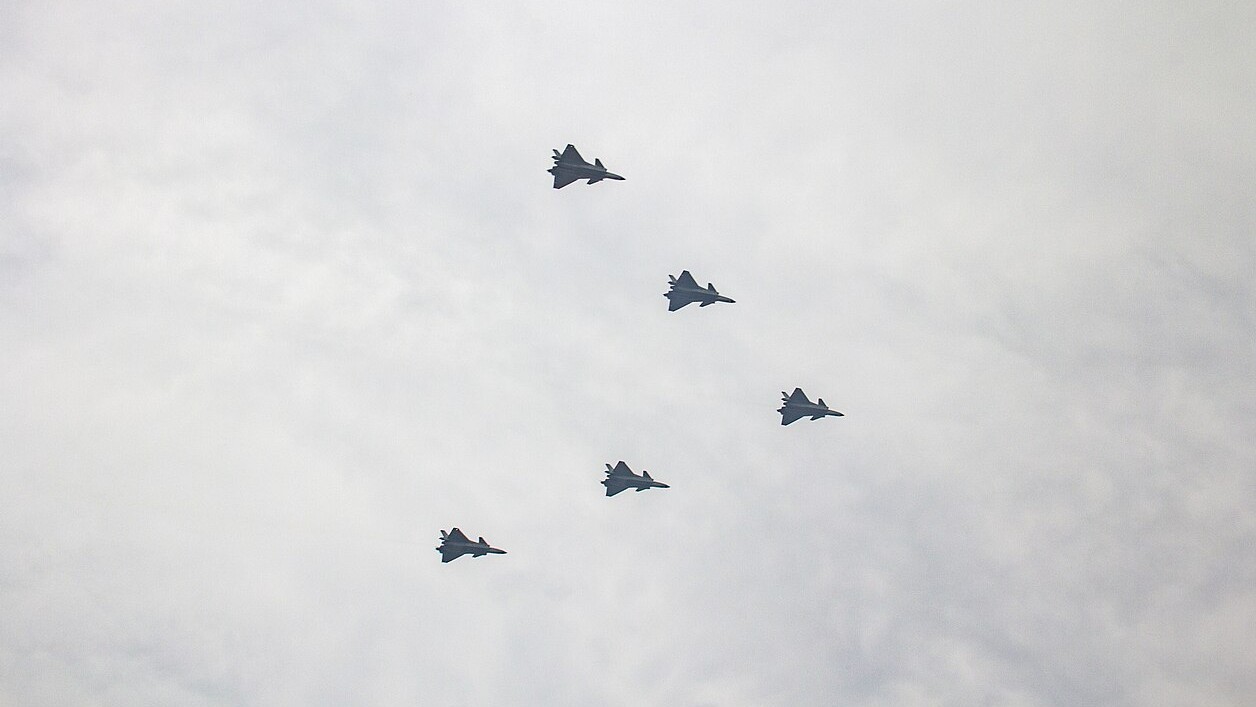
What makes China particularly challenging for controllers is that 80% of their airspace is restricted to military use. Commercial aviation can only pass through tight corridors, resulting in very dense traffic in almost any part of the country, but particularly over the busy and strategic East Coast. In the US and Europe, the ratio is roughly the opposite: 20% for the military, 80% for civil aviation.
China also exercises a zero-tolerance policy for controllers who make mistakes, even if such mistakes were unintentional and did not result in an accident. For example, loss of sufficient separation between two planes can result in pay deductions or complete terminations.
China does not have any funding issues as the US or Europe do. The aviation sector is recognized as a strategic priority, and there is nothing to spare when it comes to building infrastructure and training facilities. There are no government shutdowns either. However, the controller's salary is based on the civil-servant pay bands, which scale well below the pay level of Chinese pilots in private companies. The high job pressure and low pay pave the way for challenging staffing despite all the investments.
To sum up
The global air traffic control staffing crisis will only be solved if a significant part of the on-the-job training bottleneck can be replaced by modern, high-fidelity simulated traffic. If that is accompanied by decent working conditions and a good salary, a sufficiently large talent pool will be available to maintain the required staffing levels.